Antique Dutch Delft Blue and White Large Charger Plate c 1800
$ 96.06
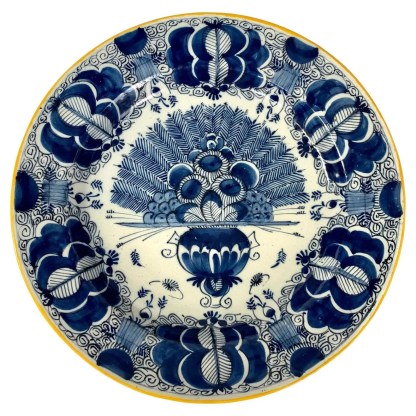
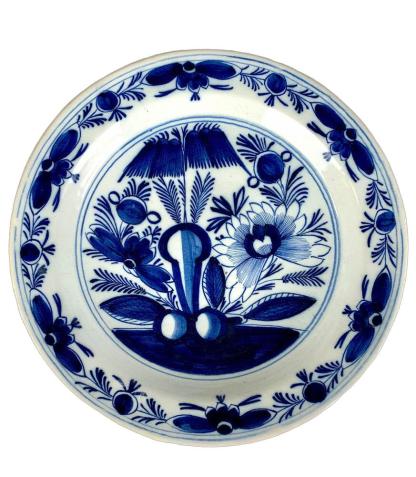
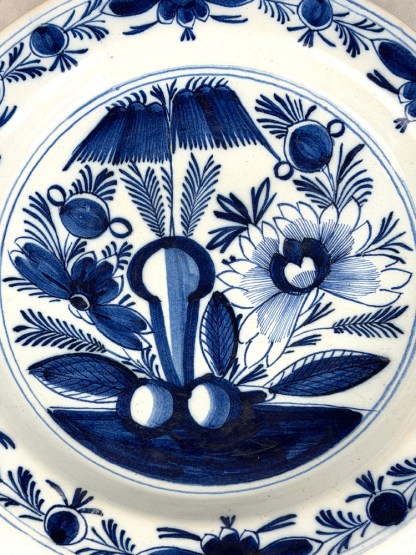
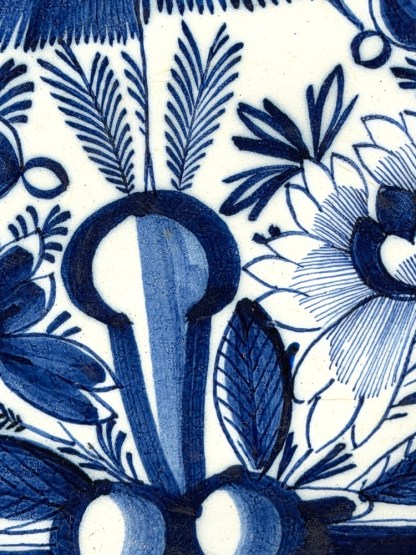
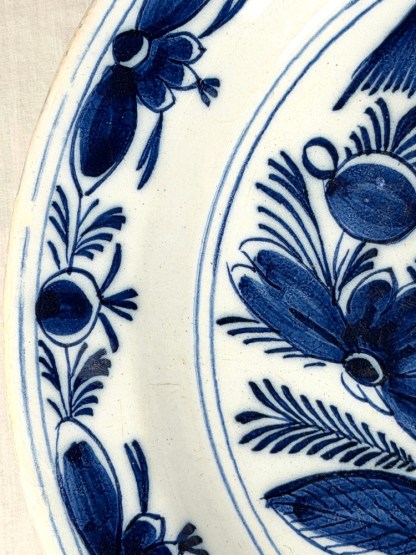
This Dutch Delft blue and white charger presents a strong, balanced garden composition centered on a stylized vase rising from a dark cobalt ground. The peony at right opens fully, its layered petals articulated in confident brushwork, while buds and feathery leaves create movement across the field. Rockwork and foliage anchor the design, giving the scene weight and structure. The cobalt is deep and saturated, shifting in tone where the brush passes more lightly over the tin-glazed surface. The wide border frames the center with a repeating pattern of buds and scrolling leaves, painted with clarity and control. At fourteen inches in diameter, the scale would give the piece presence on a wall. Dimensions: 14 inches in diameter Condition: Excellent with small edge frits invisibly restored Decoration: Hand-painted in cobalt blue with peonies, buds, foliage, and rockwork within a patterned border Material: Tin glazed earthenware Style: Dutch Delft Origin: Netherlands Date: Circa 1800 Background of Dutch Delft: The technique of making Delft was first described in writing by Gerrit Paape in “The Delft Pottery Maker,” published in 1794 and dedicated to Lambertus Sanderus, owner of De Porceleyne Claeuw. Delft faience began in the seventeenth century, with much of the finest production centered in the city of Delft. Potters coated their wares in an opaque white tin glaze and applied decoration in cobalt before covering the surface with a clear glaze. This process gave depth to the blues and a smooth, luminous finish. By about 1650, technical skill had advanced significantly, ushering in the golden age of Delft production