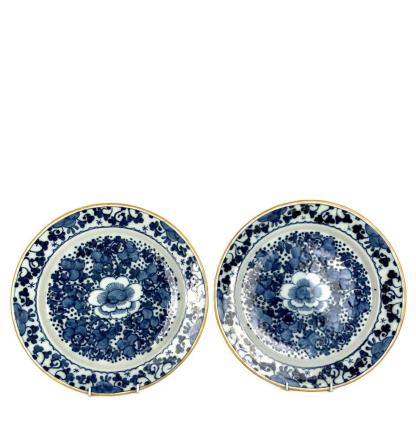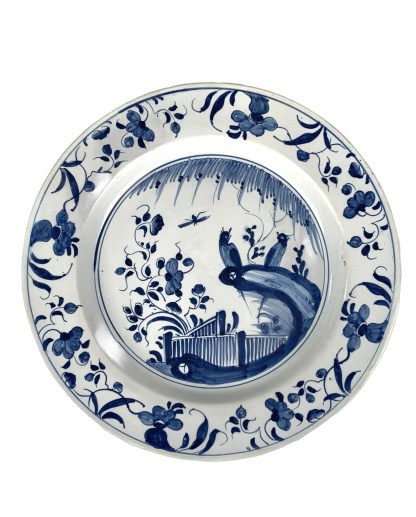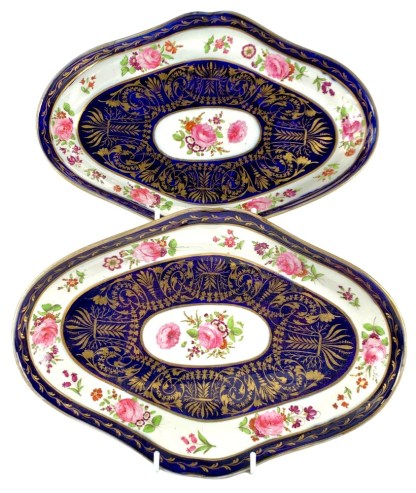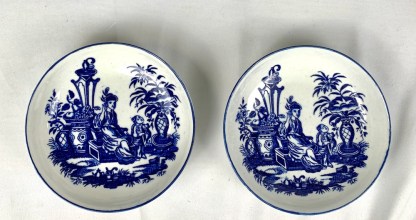
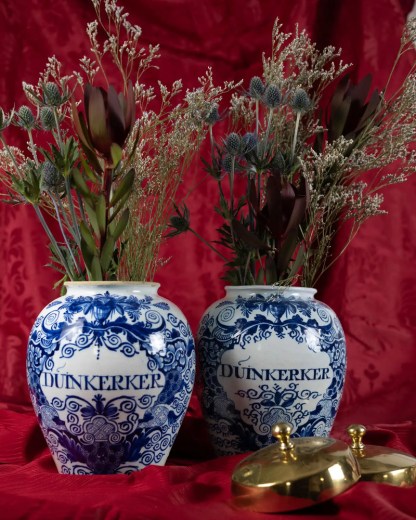
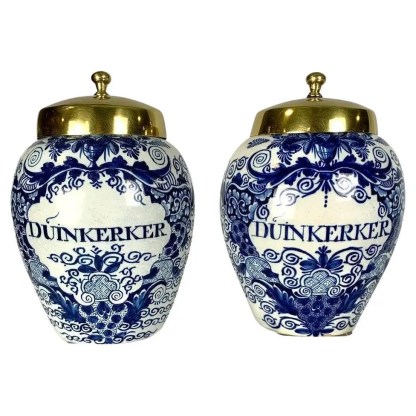
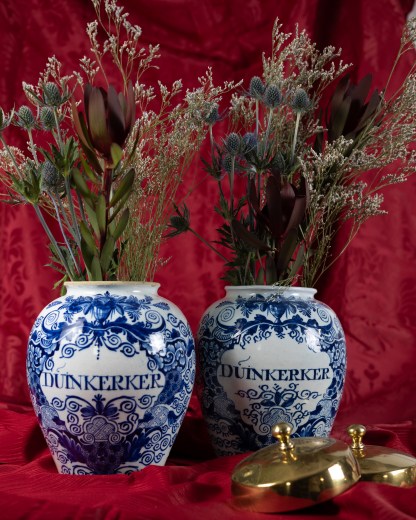
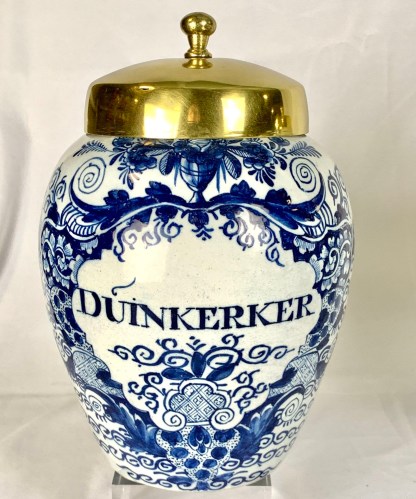
Pair Blue and White Delft Tobacco Jars Delft Hand Painted 18th Century
$ 97.50
Background of Dutch Delft The technique of making Delft was first described in writing by Gerrit Paape in “The Delft Pottery Maker,” written in 1794 and dedicated to Lambertus Sanderus, the owner of De Porceleyne Claeuw (The Porcelain Claw). Delft faience began in the 17th century. Much of the most beautiful Delft was produced in the Dutch city of Delft. The Delft potters began to coat their pots thoroughly in a white tin glaze. They then began to cover the white tin glaze with a clear glaze, giving depth to the fired surface and smoothness to cobalt blues. Over time they created a good resemblance to porcelain. By circa 1650, the technical skills of the potters and painters were much improved, and Delft began its golden age. Background of 18th Century Tobacco Use in The Netherlands Tobacco use in 18th century Holland was widespread and socially acceptable. It was commonly consumed through smoking in pipes. Pipe smoking became popular among all social classes, from the working class to the wealthy elite. Tobacco was not only enjoyed for its recreational purposes but also had a role in social rituals and gatherings. It was often smoked during social events, in coffeehouses, taverns, and at private gatherings. **The Philadelphia Museum of Art “Tobacco Jar and Cover 1764-1772 Made by De Porceleyne Schotel (The Porcelain Dish), Delft, Netherlands (1598–1791) Under Johannes van Duijn (Dutch, active 1764–1772) Date: 1764-1772 Medium: Tin-glazed earthenware; brass cover Dimensions: 11 5/8 × 7 11/16 inches (29.5 × 19.5 cm) Classification: Containers Credit Line: Bequest of Warner J. Steel, 1937 Accession Number: 1937-9-30ba, bb Geography: Made in Delft, Netherlands, Europe” We offer FREE shipping to the continental United States. For orders shipping outside the continental US, please email [email protected] for a shipping quote. Buyer Protection Guarantee: your purchase will arrive as described. Questions? Contact us.